
Why you keep repeating patterns (and how ThetaHealing works)


If you’ve ever felt like you’ve reached that level of self-awareness where you can identify and understand your patterns, and you are able to work on your mindset, but somehow you keep snapping back to old patterns of behaviour (same thoughts, same emotional reactions, same outcomes), then you’ve already touched the edge of what ThetaHealing works with.
Because not everything we experience is coming from the conscious mind.
ThetaHealing is a method that works directly with the subconscious layer, where beliefs, emotional responses, and learned patterns are stored. It’s based on the idea that many of the things shaping our reality aren’t the thoughts we’re aware of, but the beliefs and associations running underneath them, often formed early, repeated over time, and reinforced through experiences, without us even realising it.
The technique itself uses a meditative process to access what’s known as the theta brainwave state - a deeply relaxed state where the mind becomes more internally focused. In this state, it becomes easier to identify and shift the beliefs and emotional responses that are otherwise difficult to reach through conscious effort alone.
"ThetaHealing is a philosophy and complete healing system, which can be used to change self-limiting beliefs and improve positive beliefs, as well as for self-understanding and evolving spiritually for the benefit of humankind." - Vianna Stibal
From there, the work is not about forcing change, but about understanding what’s actually driving the pattern, and then changing it at the level where it was created.
That’s where ThetaHealing sits: not at the level of surface behaviour, but at the level of the internal system that produces it.
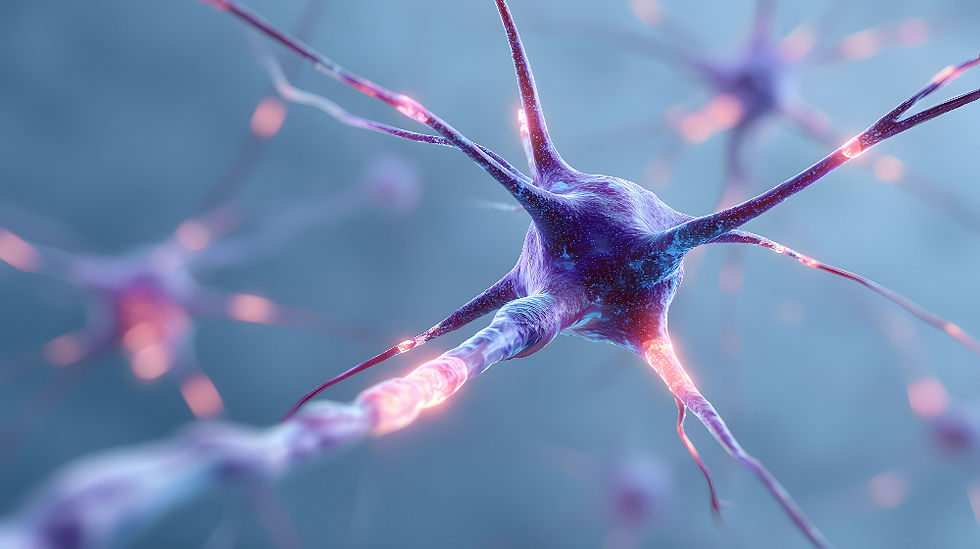
The science behind brainwaves

Scientists discovered that the human brain operates through electrical activity, which can be measured as brainwaves using special equipment. These brainwaves are categorised by frequency ranges, and each is associated with different states of consciousness:
Epsilon (<0.5 Hz): extremely slow brainwave activity, associated with very deep states of unconsciousness or advanced meditative states
Delta (0.5–4 Hz): deep, dreamless sleep, physical restoration, and healing processes
Theta (4–8 Hz): deep relaxation, drowsiness, early sleep stages, vivid imagery, and subconscious processing
Alpha (8–12 Hz): relaxed, calm, reflective awareness, often present during rest or light meditation
Beta (12–30 Hz): active thinking, focus, problem-solving, everyday waking consciousness
Gamma (30–100 Hz+): high-level cognitive processing, learning, perception, and moments of insight
Theta brainwaves are usually observed during states of deep relaxation, light sleep, and meditation. They sit between alpha (relaxed awareness) and delta (deep sleep), acting as a transition zone between conscious and subconscious processing.
From a neuroscience perspective, theta activity is associated with:
Memory encoding and retrieval — theta rhythms are prominent in the hippocampus, a brain area critical for forming and recalling memories. Research suggests theta waves play a role in how experiences are processed and integrated.
Reduced sensory input, increased internal focus — during this state, the brain becomes less engaged with external stimuli and more focused on internal thoughts and sensations. This is why it commonly appears in early sleep stages, deep meditation, and dream-like states.
Heightened suggestibility and imagination — because the analytical part of the mind is less dominant in this state, theta is often linked to vivid mental imagery, intuitive or associative thinking, and increased openness to suggestion.
Emotional processing — theta activity has also been linked to the processing of emotional experiences, particularly in connecting past memories with present perception.
In simple and practical terms, the theta state is often described as a “threshold state” - not fully awake, but not asleep either - where the brain is more flexible in how it accesses and reorganises information.

ThetaHealing is not the only modality that works with this particular state. Techniques like hypnotherapy, guided meditations, and even some somatic or trauma-focused therapies aim to bring the brain into this deeply relaxed, internally focused state. The goal across all these methods is similar: to reduce the dominance of the analytical mind, so that deeper patterns - beliefs, memories, emotional responses - become more accessible and easier to work with.
What does ThetaHealing work with exactly?
At the core of this work are what ThetaHealing refers to as limiting beliefs and background programs.
These are not your surface-level thoughts that you can catch and challenge. They are deeper, unconscious patterns that shape how you interpret situations, how you react emotionally, and ultimately the decisions you make.
These beliefs are understood to exist on multiple levels: current life experiences, patterns learned early in childhood, picked up from family or environment, and reinforced over time through repetition and emotional impact. Some of these run so deeply that they don’t feel like beliefs at all, they feel like facts.
That’s where the idea of background programs comes in.
A background program is an automatic script. It runs without conscious input and influences how you respond before you even get the chance to think. It’s the reason why you might logically understand something (“I’m safe”, “I can do this”), but still feel anxiety, resistance, or self-sabotage bubbling up.
These programs are efficient. They were originally created to help you navigate the world, keep you safe, or make sense of your environment. But over time, especially when they’re built on outdated or misinterpreted experiences, they can start working against you instead of for you.

Let me give you an example.
When I was around seven, my mother became seriously ill - metastatic cancer. The doctors gave her six to nine months to live. My father refused to accept that. He went all in, researching herbalism, natural remedies, anything that could help. And in many ways, he did something extraordinary: he managed to extend her life by almost three years.
Those are the facts I understand now, as an adult.
But as a child, I didn’t see resilience or devotion in the way I can today. What I saw - and what stayed with me - was something very different. I saw constant stress. I saw exhaustion. I saw struggle with no relief. There was no sense of lightness, no space for joy, no emotional comfort. Just effort. Survival. Holding things together.
And without realising it, I built my understanding of love around that.
Somewhere in the background, a program formed:
If you truly love someone, you stay, and staying means struggle.
That belief didn’t show up as a sentence in my mind. It showed up as patterns. As tolerance for stress. As choosing dynamics that felt heavy but familiar. As normalising emotional pressure instead of questioning it.
It stayed with me for years, quietly shaping my relationships, until I finally recognised what was running underneath: to me, a “successful” relationship meant enduring, not enjoying.
And once you see a pattern like that for what it is - not truth, but programming - you can start to change it.
How these beliefs are structured

These beliefs don’t exist in isolation.
In many cases, they’re layered, almost like stacks or “towers” of related patterns, built over time through different experiences.
For example, a belief like “I’m not good enough” might not show up just once. It can sit underneath multiple areas of life - relationships, work, visibility, self-worth - each one expressing it in a slightly different way.
So what you see on the surface might look like separate issues:
fear of being seen
difficulty setting boundaries
overworking or people-pleasing
But underneath, they can all be connected to the same core belief.
And within each of these “towers,” there are layers — beliefs built on top of other beliefs.
You might start by working on something more accessible:
“I’ll be judged”
“It’s not safe to speak up”
But often, these sit on top of something deeper.
This is why ThetaHealing focuses on getting to what’s called the core belief: the one at the base of the pattern.
Because once that core is identified and changed, everything built on top of it tends to shift with it.
At the same time, not every session goes straight to the core.
Sometimes you clear a few layers first - which still creates noticeable change - but if the root belief is still in place, parts of the pattern can resurface over time.
That’s not failure. It’s just a sign that there’s something deeper still driving it.
And this is why, for certain patterns, more than one session may be needed, not because the work isn’t effective, but because you’re working through layers to reach the actual source.
So how does ThetaHealing actually work?
Once you understand that these patterns are not random, that they’re driven by underlying beliefs and background programs, the next question is: how do you actually change them?
This is where working with a ThetaHealing practitioner comes in.
Depending on the setting, the experience can look slightly different.
In a group session, you’re guided into a deeply relaxed, meditative state - the theta state - where your mind becomes more internally focused. From there, the practitioner does the bulk of the work, identifying and shifting common patterns on a group level while you remain in that receptive state.
In a 1:1 session, the process is more interactive. You stay fully awake and aware, and we work together to understand what’s happening in your life: the patterns, the triggers, the recurring outcomes. Through targeted questions, we trace those back to the underlying beliefs driving them.
Once those beliefs are identified, that’s where the actual change happens.
As the practitioner, I enter the theta state and work at that level, requesting the change and witnessing it take place. You don’t need to force anything, visualise anything, or “make it happen”. Your role is to be present and open; the work itself is done in that deeper state.
This is an important distinction.
Because the focus isn’t on you trying to override your patterns or consciously reprogram yourself. It’s about accessing the level where those patterns were created, and allowing them to be changed there.
And when that shift happens at the root, the patterns that were built on top of it begin to change naturally.
What this means in real life
At the end of the day, this work isn’t about theory, brainwaves, or even the technique itself. It’s about what changes for you.
It’s about those moments where:
something that used to trigger you… doesn’t anymore
a reaction you couldn’t control… simply isn’t there
a situation that used to feel heavy… feels neutral, or even easy
Not because you forced yourself to think differently, but because the pattern driving it is no longer running.
And that’s usually how people notice the shift.
It’s not always a big dramatic moment. It can be subtle — quiet, almost like a whisper:
“I would have reacted very differently before.”
If you recognise yourself in the patterns described above - the repetition, the awareness without lasting change, the feeling that something deeper is at play - then know that you’re not missing discipline, and you’re not “doing it wrong.”
You’re likely just working at the wrong level.
And sometimes, the shift doesn’t come from trying harder, but from finally working with the part of the mind that’s been running the show all along.

Working with this in practice
If you want to experience this in a structured way, there are a couple of options depending on what feels right for you.
I run group workshops in Bournemouth as part of the Inner Blueprint Re-coding series, where we work on specific themes and shift patterns in a guided, meditative setting. You can check upcoming dates and themes here.
If you prefer a more personalised approach, I also offer online 1:1 sessions, where we focus directly on your specific patterns and what’s currently coming up for you. You can check availability here.
If you’ve been recognising yourself in this as you read, this is the work we’d be doing together.


Comments